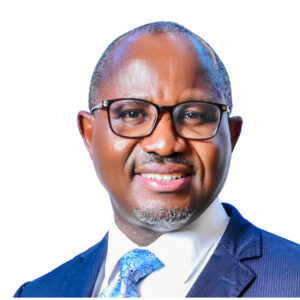
THE LEGACY OF FABIAN KASI ,THE ARCHITECT OF UGANDA'S BANKING GIANT
- 5:54 am
How Fabian Kasi spent fifteen years quietly engineering the most remarkable transformation in Ugandan banking history growing a mid-tier lender into a UGX 8.6 trillion institution that serves over three million lives.
When Fabian Kasi walked into Centenary Bank’s headquarters at Mapeera House in August 2010, he inherited a creditable but modest institution, a bank with UGX 807 billion in total assets, a customer base of roughly 900,000 people, and a net profit of UGX 29.4 billion. What he would build over the next fifteen years defied expectation and rewrote the story of Ugandan banking.
By the time he hands the managing director’s baton to his successor Godfrey Byekwaso and steps up as Group Chief Executive Officer of Centenary Group, the institution stands transformed: total assets have scaled to UGX 8.6 trillion, customer deposits have surged from UGX 630 billion to UGX 5.27 trillion, and net profit closed 2025 at a landmark UGX 424.2 billion a 23.9 percent jump from the prior year, itself a record.
The numbers are extraordinary. But those who have watched the bank closely insist that the balance sheet tells only part of the story.
When Fabian Kasi walked into Centenary Bank’s headquarters at Mapeera House in August 2010, he inherited a creditable but modest institution, a bank with UGX 807 billion in total assets, a customer base of roughly 900,000 people, and a net profit of UGX 29.4 billion.
What he would build over the next fifteen years defied expectation and rewrote the story of Ugandan banking.
By the time he hands the managing director’s baton to his successor Godfrey Byekwaso and steps up as Group Chief Executive Officer of Centenary Group, the institution stands transformed: total assets have scaled to UGX 8.6 trillion, customer deposits have surged from UGX 630 billion to UGX 5.27 trillion, and net profit closed 2025 at a landmark UGX 424.2 billion, a 23.9 percent jump from the prior year, itself a record.
The numbers are extraordinary. But those who have watched the bank closely insist that the balance sheet tells only part of the story.
The transformation in milestones
2010-Arrival
Kasi joins as Managing Director. Assets stand at UGX 807 billion; customer base at 900,000; net profit UGX 29.4 billion.
2014 -Climbing the ranks
Centenary surpasses Barclays and Crane Bank to become Uganda’s third-largest bank by assets.
2018 -Second largest
Centenary locks in the number two position behind Stanbic, a ranking built on a growing ATM network, branch expansion, and a surging rural customer base.
2022–2023, Global recognition
Named Uganda’s Best Retail Bank in the Global Banking and Finance Awards. Kasi wins CEO of the Year at the 10th Pan-Africa Bank 4.0 Summit in Nairobi.
2024-Record profit
Net profit reaches UGX 342.3 billion, a then-record, driven by digital expansion and deepened ESG commitments aligned with the UN Sustainable Development Goals.
2025-The peak
Profit after tax climbs to UGX 424.2 billion. Total assets reach UGX 8.6 trillion. Customer deposits hit UGX 5.27 trillion. The bank’s ATM network stands at 205 locations nationwide.
Digital transformation & inclusion
One of Kasi’s most consequential moves was recognizing early that the future of banking in Uganda ran through digital infrastructure not despite the bank’s rural mandate, but because of it. Expanding digital touchpoints was not an urban first luxury; it was the most cost-effective way to serve people who had never lived near a branch.
He doubled the ATM network to 205 locations and grew the customer base from 900,000 to over three million, while simultaneously building out agent banking and mobile channels that pushed services into communities where brick-and-mortar banking remained out of reach.
Perhaps the least discussed but most strategically significant move under Kasi is the evolution of Centenary from a standalone commercial bank into the nucleus of a broader financial services group Centenary Group with operations in Uganda and Malawi, and a leadership structure now configured for regional expansion. It is a legacy of institution-building that outlasts any single profit figure.
Leadership beyond the bank
Kasi’s influence has never been confined to Mapeera House. Across his tenure he has served on the boards of the Capital Markets Authority, Financial Sector Deepening Uganda, and Malaria Free Uganda — governance roles that shaped the policy architecture around which the entire sector operates. He has also served as Chair of the Africa Charter of the Global Alliance for Banking on Values (GABV), an international body dedicated to purpose-driven finance.
A holder of a Bachelor of Commerce in Accounting from Makerere University and an MBA from the University of Newcastle, Australia, and a Fellow of the Association of Chartered Certified Accountants, Kasi is routinely cited as the benchmark for homegrown banking leadership in East Africa.
When the transition completes in July 2026, his successor Byekwaso steps into a bank that ranks second nationally by deposits, lending, assets, and profitability and a Group CEO role that will see Kasi guide its next chapter of regional expansion. It is, by any measure, an end of an era. It is also, unmistakably, a continuation.
Fifteen years. Ten times the assets, more than three times the customers, a bank restructured into a group.
A sector influenced from within its governance corridors. When historians of Ugandan finance write the account of how a country built a homegrown banking institution of genuine scale, the name at the centre of that story will be Fabian Kasi.